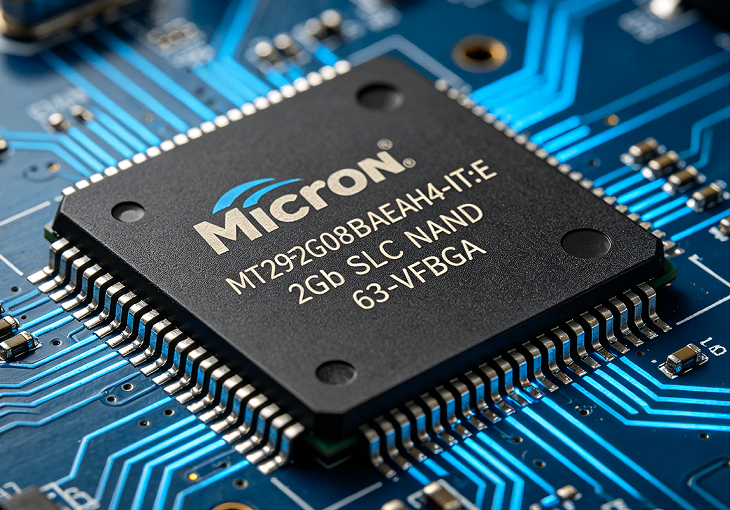
MT25QL256ABA8E12 1SIT: 256Mb Quad SPI Serial NOR Flash for Industrial OEM & EMS Firmware Storage
MT25QL256ABA8E12‑1SIT: 256Mb Quad SPI Serial NOR Flash for Industrial OEM & EMS Firmware Storage
Quick Answer
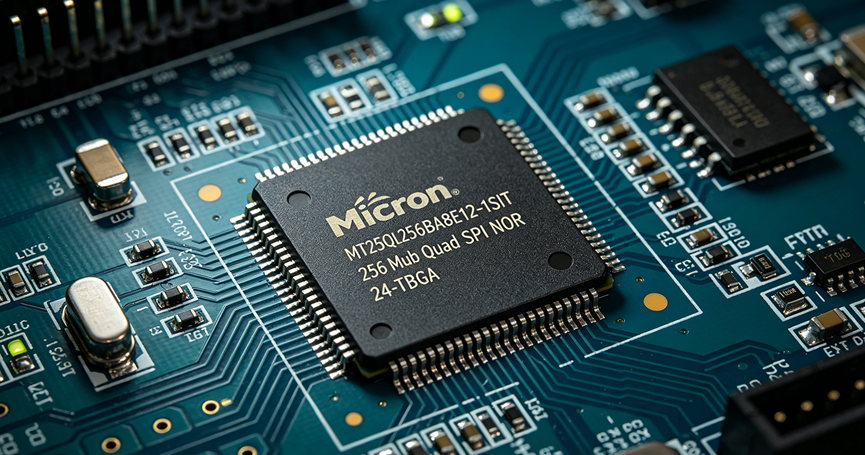
Use MT25QL256ABA8E12‑1SIT when your BOM requires a 256Mb Quad‑SPI serial NOR flash in compact 24‑TBGA (6 × 8 × 1.2 mm) package supporting XIP execute‑in‑place. It delivers maximum 133 MHz clock speed and industrial‑grade −40 °C ~ +85 °C operating range; always verify lot condition, date‑codes and lifecycle status before volume procurementMicron Tec....
Introduction
MT25QL256ABA8E12‑1SIT is a Micron 256 Mb multiple‑I/O serial NOR flash built for embedded firmware, bootloader and configuration‑parameter storage. It supports Quad SPI high‑speed interface and execute‑in‑place (XIP) capability, reducing RAM overhead for microcontroller‑based platformsMouser Ele.... For electronic‑component procurement managers and OEM/EMS buyers, its core value combines fast random read performance, industrial environmental robustness and secure write‑protection features for both new product development and frozen‑BOM sustainment. It is a surface‑mount non‑volatile code‑storage component and is not intended for mass‑data file storage.
Product Overview and Positioning
Core conclusion first: MT25QL256ABA8E12‑1SIT is industrial‑grade 256 Mb Quad‑SPI NOR flash optimized for boot and firmware storage, suitable for new embedded designs as well as legacy‑platform sustainment where pin‑compatible substitutes carry firmware‑validation risk.
Compliant with standard SPI, Dual‑SPI and Quad‑SPI protocols, this 24‑TBGA device integrates hardware‑enforced write‑protection, OTP one‑time‑programmable memory area and CRC data‑integrity checking functionsMouser Ele.... It supports 3‑byte and 4‑byte address modes to access full 256 Mb memory space, together with flexible erase granularity including 4 KB sub‑sector, 64 KB sector and bulk chip erase operations.
Operating supply voltage ranges from 2.7 V to 3.6 V, rated for industrial temperature −40 °C to +85 °C with typical 20‑year data retention at rated temperature. Even though alternative 256 Mb serial NOR parts exist on the market, matching density or Quad‑SPI interface alone cannot guarantee identical boot timing, write‑protection behaviour or erase‑sector characteristics. Engineering validation remains mandatory for any proposed drop‑in replacement.
Four Core Advantages for OEM / EMS Embedded Projects
- Quad‑SPI High‑Speed Interface with XIP Execute‑In‑Place Support
Core conclusion first: Up to 133 MHz Quad‑SPI clock enables fast random read and XIP capability, lowering system RAM requirements for bootloader and RTOS firmware execution.
Maximum STR clock reaches 133 MHz while DTR double‑transfer‑rate mode supports 90 MHz, increasing effective read bandwidth for firmware boot‑up and code execution. XIP allows MCU or FPGA to run code directly out‑of‑flash without full image shadowing into RAM. Important caveat: real‑world throughput depends on host controller, PCB signal integrity and firmware driver implementation; published clock figures are lab‑condition maximum values, not guaranteed system performance.
- Industrial‑Grade Wide‑Temperature Compact 24‑TBGA Package
Core conclusion first: Small‑form‑factor 6 × 8 × 1.2 mm 24‑TBGA footprint fits space‑constrained embedded PCBs with full industrial −40 °C ~ +85 °C temperature toleranceMicron Tec....
The compact TBGA package is well‑suited for densely‑populated industrial control, IoT and networking hardware. Package ball‑map, mechanical height and reflow profile must be reviewed during component selection or substitution. Its full industrial temperature rating supports deployment inside factory equipment, outdoor field nodes and thermally‑uncontrolled enclosures, though it is not automotive‑qualified without formal supporting documentation.
- Multi‑Level Hardware & Software Security and Write‑Protection
Core conclusion first: Rich locking mechanisms including OTP memory, sector‑level write‑protect and CRC checking strengthen firmware anti‑tamper and data‑integrity capabilities for OEM end‑productsMouser Ele....
The part includes a dedicated 64‑byte user‑lockable OTP region for board serialization, unique IDs or calibration constants. Volatile and non‑volatile sector‑level locking, hardware WP pin and power‑up program‑erase blocking prevent accidental or malicious firmware over‑write. Built‑in CRC function assists host systems to verify firmware image integrity during boot sequence, reducing field failure caused by bit‑flip corruption.
- Flexible Erase Granularity and Long‑Term Data Retention
Core conclusion first: Mixed 4 KB / 64 KB erase granularity optimizes update efficiency; 20‑year typical data retention guarantees long‑lived configuration and boot‑code storage.
4 KB sub‑sector erase enables partial small‑size configuration updates without erasing large adjacent sectors, reducing firmware‑update time for IoT and industrial devices. 20‑year typical data retention reduces risk of configuration loss over equipment service life. Program‑erase endurance and retention specifications must be respected when defining field‑update frequency for end‑products.
Technical Parameters and Procurement Interpretation Table
|
Parameter |
Published value |
Procurement meaning |
|
Manufacturer |
Micron Technology |
Verify full part suffix, die marking and trace documents; do not rely solely on marketplace titlesMicron Tec... |
|
Memory Density |
256 Mb (32 MB) |
Confirm usable memory mapping; 4‑byte address mode required for full‑density access |
|
Interface |
SPI / Dual‑SPI / Quad‑SPI (STR / DTR) |
Host controller must support Quad‑SPI for maximum throughput; verify driver compatibility |
|
Max Clock Speed |
133 MHz (STR), 90 MHz (DTR) |
Lab‑rated maximum; actual speed depends on PCB layout and host timing margins |
|
Package |
24‑TBGA (T‑PBGA) |
Cross‑check ball‑map, footprint and reflow profile before evaluating alternative components |
|
Dimensions |
6.0 × 8.0 × 1.2 mm max |
Validate mechanical height constraints for target enclosure design |
|
Operating Temperature |
−40 °C ~ +85 °C |
Industrial temperature rating; not AEC‑Q100 automotive‑qualified without formal certificates |
|
Supply Voltage |
2.7 V ~ 3.6 V |
Must match board power‑rail design specifications |
|
Erase Granularity |
4 KB sub‑sector, 64 KB sector, bulk erase |
Firmware partition layout needs to align with sector boundaries for efficient field updates |
|
Data Retention |
20 years typical (rated temperature) |
Plan end‑of‑service‑life expectations for field‑deployed units |
Note: Use this table for BOM screening and RFQ preparation. Final engineering release must reference Micron official datasheet for MT25QL256ABA8E12‑1SIT.
Suitable Application Scenarios
Industrial Controllers & HMI Devices
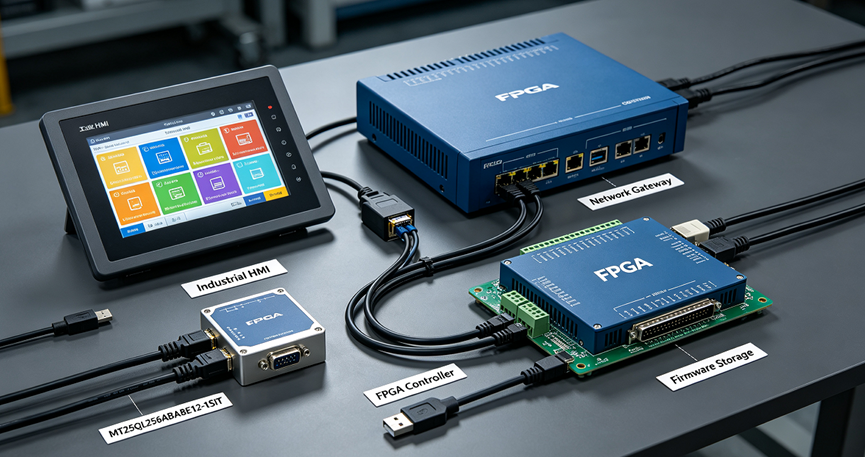
Industrial human‑machine interfaces, PLC auxiliary modules and embedded controllers use this NOR flash for bootloader, RTOS firmware and factory calibration parameters. Validate erase‑update workload, thermal operating envelope, power‑fail recovery flow and write‑protection configuration before volume production.
Network Gateways & FPGA‑Based Embedded Hardware
IoT edge gateways, remote field terminals and FPGA systems store bitstream configuration images, boot code and network‑setting parameters. XIP capability helps reduce external RAM bill‑of‑material cost. For unattended remote hardware, implement CRC integrity checks and define sampling scope for incoming component inspection.
Secure Smart Instrumentation & Test Equipment
Specialised test‑and‑measurement instruments and smart industrial sensors leverage OTP serialization and multi‑level write‑protection to secure firmware images and unit‑specific calibration data. Do not select parts only by density; confirm erase granularity, locking features and temperature rating match product security and reliability requirements.
Buyer Pain Points and Practical Responses
|
Pain point |
Practical response for OEM / EMS Procurement |
|
Supplier offers “pin‑equivalent” alternate 256 Mb NOR flash as direct replacement |
Compare ball‑map, package dimensions, erase‑sector geometry, boot timing and write‑protection behaviour; require full firmware validation before BOM modification |
|
Unclear lifecycle / obsolescence risk for MT25QL256ABA8E12‑1SIT |
Request manufacturer‑channel lifecycle statement and dated quotation; third‑party component databases are not authoritative EOL notices |
|
Available stock includes older date‑code material with unknown storage history |
Audit lot‑codes, dry‑pack MSL status, bake history and solderability risk; establish risk‑based incoming‑inspection sampling rules |
|
Marketing materials quote maximum 133 MHz clock as guaranteed real‑world operating frequency |
Treat 133 MHz as lab maximum specification; communicate realistic timing‑margin expectations to hardware and firmware engineering teams |
|
Broker‑channel stock lacks complete component traceability |
Enforce supplier qualification, label photographs, lot‑trace documents and risk‑adjusted incoming‑inspection workflow for industrial‑grade orders |
Lifecycle and Incoming Quality‑Control Guidance
Core conclusion first: Confirm formal lifecycle status before committing MT25QL256ABA8E12‑1SIT to large‑volume production orders.
Public third‑party component databases may display conflicting availability status. Procurement teams must obtain supporting evidence from authorised supplier channels rather than trusting aggregated web‑scraped data as official Micron notifications.
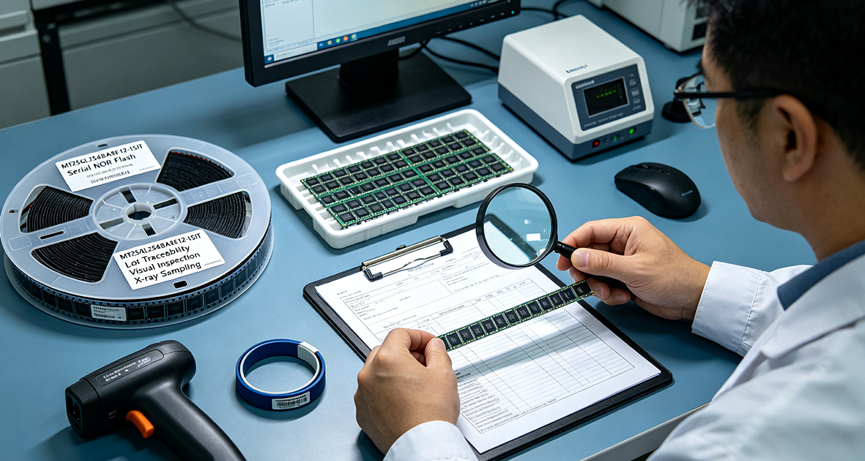
A practical incoming‑control workflow for MT25QL256ABA8E12‑1SIT includes these steps:
- Full MPN, suffix, lot‑code and date‑code label‑and‑document review
- Visual package and marking inspection
- Risk‑weighted X‑ray sampling to verify ball‑joint condition for aged lots
- Moisture‑barrier bag and humidity‑indicator checks for moisture‑sensitive device
- Reflow / bake procedure planning for older date‑code inventory
- Application‑specific electrical, read‑write and boot‑function sampling validation
Inspection strictness scales with supplier risk level, lot age, total order quantity and end‑equipment criticality.
Frequently Asked Questions (FAQ)
Q1: What memory density does MT25QL256ABA8E12‑1SIT deliver? A1: It is a 256 Mb (32 MB) Quad‑SPI serial NOR flash. Full memory space requires enabling 4‑byte address mode on host controller; usable capacity depends on firmware partition layout.
Q2: What interface standards does MT25QL256ABA8E12‑1SIT support? A2: It supports standard SPI, Dual‑SPI and Quad‑SPI in both Single Transfer Rate (STR) and Double Transfer Rate (DTR) modes, up to 133 MHz STR clock speed.
Q3: Is 133 MHz guaranteed real‑world operating clock frequency? A3: 133 MHz is manufacturer‑published lab‑condition maximum STR clock. Real‑world stable operating frequency depends on host controller capability, PCB signal integrity and firmware timing configuration and requires system‑level validation.
Q4: Can any other 256 Mb Quad‑SPI NOR flash serve as direct drop‑in replacement? A4: No. Differences in ball‑map, erase‑sector size, write‑protection registers and boot‑up timing may break validated embedded firmware. Full hardware‑firmware qualification is mandatory before approving substitute components.
Q5: Does −40 °C ~ +85 °C rating mean automotive AEC‑Q100 qualification? A5: Industrial temperature rating alone does not imply automotive‑grade qualification. Request formal qualification documentation if you intend to deploy this component within automotive assemblies.
Q6: What information needs to be included in an RFQ for MT25QL256ABA8E12‑1SIT? A6: Submit full exact MPN including suffix, target quantity, required delivery date, shipping destination, acceptable date‑code range, packaging requirements (tray / tape‑and‑reel), traceability documents expectation, inspection criteria, and explicit statement whether alternate component proposals are permitted.
Q7: What are primary intended applications for MT25QL256ABA8E12‑1SIT? A7: Industrial controllers, HMI, network gateways, FPGA configuration storage and smart test‑instrument firmware storage, suitable both for new industrial designs and sustainment of existing qualified platforms.
Request a Project‑Specific Quote
MT25QL256ABA8E12‑1SIT is best evaluated for projects requiring 256 Mb industrial‑grade Quad‑SPI serial NOR flash in compact 24‑TBGA footprint for bootloader, firmware and secure configuration storage, for either new‑product development or frozen‑BOM sustainment. Send our sales team target quantity, required delivery schedule, end‑application description, acceptable date‑code constraints and incoming‑inspection requirements. Confirm exact‑part availability, lot traceability, packaging condition and formal delivery terms before issuing purchase orders.
Technical Sources
Micron official datasheet for MT25QL256ABA series. View source Micron serial NOR flash hardware integration application note. View source