• MTFC4GLGDQ-AIT A eMMC: Specs & Performance Deep Dive

    → Introduction Datasheet figures and independent benchmarks place this part in the low‑tens of MB/s for sequential throughput and single‑digit MB/s for sustained writes under typical embedded workloads—numbers that determine suitability for many automotive and industrial systems. This article explains what the MTFC4GLGDQ-AIT A eMMC offers, how it behaves in real workloads, and practical guidance for integration and validation. Top-line specTypical value / note Capacity4 / 8 / 16 / 32 Gbit (Density-dependent) InterfaceeMMC Automotive Grade (v4.41), 8-bit bus Typical Sequential R/WRead ~25–30 MB/s, Write ~6–8 MB/s Package / TempLBGA / -40°C to +85°C (AIT Grade) eMMC Controller VCC DAT[0-7] CMD/CLK NAND → 1 — eMMC Background & System Fit 1.1 — Standard Context The MTFC4GLGDQ-AIT A utilizes a managed NAND architecture where the internal controller handles ECC, wear leveling, and bad‑block management. As a v4.41 family device, it provides a stable, long-lifecycle solution for systems that do not require the higher power draw and complexity of UFS or newer eMMC 5.1 HS400 modes. Host ←––– eMMC controller (boot region / RPMB / user area) –––→ NAND → 2 — Key Specs Breakdown The part is supplied in an LBGA package and supports 8‑bit parallel data paths. Supply rails include standard VCC (NAND core) and VCCQ (I/O) domains. Engineers should prioritize signal integrity for the CMD/DAT traces, ensuring controlled impedance to match the automotive host controller's drive strength. → 3 — Performance Deep-Dive MetricDatasheet TypicalExpected Steady‑State Sequential Read~25–30 MB/s~20–28 MB/s Sequential Write~6–8 MB/s~4–7 MB/s Random 4K IOPS~500–3000~200–1500 3.1 — Benchmark Methodology To validate real-world performance, use the following fio profiles: # Sequential Write Test fio --name=seqwrite --filename=/dev/mmcblk0 --bs=128k --iodepth=1 --rw=write --size=1G --runtime=120 # Random 4K Write Test fio --name=rand4k --filename=/dev/mmcblk0 --bs=4k --iodepth=4 --rw=randwrite --size=2G --runtime=300 → 4 — System Integration & Reliability Active R/W currents spike significantly. Design PMIC rails for transient bursts and implement thermal vias under the LBGA package. High temperatures accelerate NAND wear; implement telemetry to monitor erase/write counters and spare block counts to trigger maintenance before end-of-life. → 5 — Pre-deployment Checklist Acceptance: Confirm part markings, firmware revision, and run short fio sanity tests. Thermal: Perform a thermal soak test to catch marginal devices in the lot. Lifecycle: Track PCN (Product Change Notices) for NAND generation migrations. → Summary Reliable read performance (~25-30 MB/s) ideal for boot and firmware storage. Automotive Grade (-40°C to +85°C) ensures stability in harsh environments. Requires robust thermal management and 8-bit bus configuration for peak efficiency. → Frequently Asked Questions What are realistic IOPS for the MTFC4GLGDQ-AIT A? Realistic 4K random IOPS are typically in the low hundreds to low thousands (200-1500) depending on queue depth and the state of internal garbage collection. How do you benchmark this eMMC for steady-state performance? Use long-duration runs (minutes) with fio to account for internal controller overhead. Compare fresh-out-of-box runs against sustained write states to reveal performance degradation. What is the critical checklist for incoming eMMC lots? Validate part markings, firmware revision, capacity reporting, and perform short performance sanity tests. Enforce pass/fail thresholds based on ±20% of datasheet typicals. What are the power and thermal requirements for integration? Design PMIC rails for high-current transient R/W bursts. Use thermal vias and copper pours to manage heat, as prolonged high temperatures reduce data retention and endurance.
  • MT29F2G01ABAGDWB-IT:G Datasheet: Specs & Performance Guide

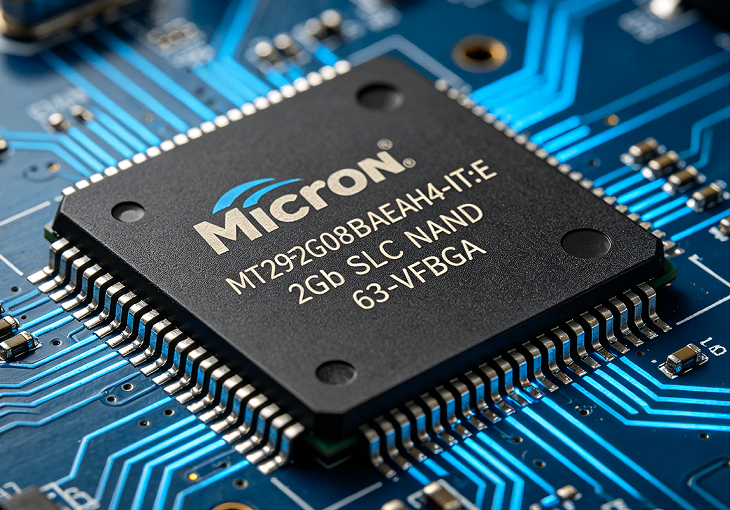
    The MT29F2G01ABAGDWB-IT:G is a 2Gb SLC SPI‑NAND device targeted at reliability‑focused embedded storage. Key metrics — 2Gb density, SLC cell endurance and multi‑I/O SPI throughput — make it a strong candidate for boot, logging and industrial storage. This guide interprets the Datasheet and highlights practical Performance, electrical limits, and design trade‑offs for engineers and procurement specialists. Parameter Specification Notes Density 2Gb (256MB) SLC Technology Interface SPI (x1, x2, x4) Quad I/O Support Voltage (Vcc) 2.7V – 3.6V Standard 3.3V Class Operating Temp -40°C to +85°C Industrial Grade (IT) Page Size 2176 Bytes 2048 + 128 Spare Package 8-pad U-PDFN Compact Footprint 1 — Product overview & key specifications MT29F2G01 SLC NAND CS# CLK SI/SIO0 VCC GND SO/SIO1 1.1 Device identity & memory organization As an SLC 2Gb part, it uses small page/block structures favorable to deterministic writes. A representative page size is ~2176 bytes. Understanding pages/blocks/planes simplifies address mapping, wear distribution, and ECC placement during controller design. 1.2 Electrical & environmental limits The device operates in the 3.3V class with industrial temperature grading. Practical margins include power sequencing, 0.1µF+10µF local decoupling, and layout thermal relief. Add guardbands to current budgets for worst‑case active bursts. 2 — Interface & Performance Analysis 2.1 SPI / x4 I/O Timing The device supports standard SPI and multi‑I/O modes (x1/x2/x4). To estimate practical bandwidth, use: Bandwidth ≈ (clock_rate × data_lines × (useful_bits/total_bits)) × (1 − overhead). Moving to x4 reduces cycles per byte significantly but requires matched routing. 2.2 Endurance & Reliability SLC technology provides superior P/E endurance and retention. However, system ECC and bad‑block management remain essential. Recommended ECC should correct worst-case raw bit error rates (RBER) per product lifetime targets. 3 — Firmware & System Integration Recommended Startup Flow: Power up → Reset → Read ID (0x9F) → Run manufacturer ECC check → Scan blocks for bad-block markers → Build logical-to-physical map → Enable boot operations. 4 — Frequently Asked Questions What is the primary advantage of the MT29F2G01ABAGDWB-IT:G? It offers 2Gb of SLC (Single-Level Cell) NAND which provides superior endurance (typically 100k cycles) and data retention compared to MLC/TLC alternatives, using a simple SPI interface. What are the supported SPI modes for this device? The device supports Standard SPI (x1), Dual SPI (x2), and Quad SPI (x4) modes, significantly increasing read/write throughput during data phases. Does the MT29F2G01ABAGDWB-IT:G require external ECC? While SLC is robust, a minimum of 4-bit or 8-bit ECC is recommended. Many controllers or the on-die ECC engine (if enabled) handle this to ensure data integrity over the device's lifespan. What is the operating temperature range? The 'IT' designation indicates an Industrial Temperature grade, rated for operation from -40°C to +85°C. Summary 2Gb SLC SPI-NAND: Compact form factor, high endurance, and industrial reliability. Design Focus: Power sequencing, matched quad routing, and effective thermal grounding are critical for signal integrity. Firmware Strategy: Implement robust bad-block management and ECC to maximize the 100k P/E cycle potential.
  • MT40A512M16JY-083E: Current Availability & Lifecycle Data

    Recent inventory scans and lifecycle catalogs show increasing listings flagged as limited or obsolete across many DDR4 listings; MT40A512M16JY-083E appears in that same signal set. This brief provides a factual snapshot of availability and lifecycle posture, plus clear substitution guidance for electronics designers and procurement teams. Parameter Specification Details Density 8Gb (512 Meg x 16) Technology DDR4 SDRAM Speed Grade -083E (DDR4-2400) Package FBGA (Fine-pitch Ball Grid Array) Voltage 1.2V (Nominal) 1 — Background: Technical Profile & Roles MT40A512M16JY-083E VDD/VSS Control DQ [0:15] ADDR/BA The MT40A512M16JY-083E is typically used as system DRAM in embedded compute, networking modules, and storage controllers. Designers choose this DDR4 class for its balance of density and power, serving as primary memory or high-throughput buffers in memory-dense subsystems. 2 — Market Availability & Lifecycle Analysis Inventory signals indicate a tightening supply chain. Evidence shows shrinking active listings and rising "limited stock" flags across authorized catalogs. Procurement should interpret "In Stock" signals with caution, as MOQ (Minimum Order Quantity) and lead times are currently volatile. Active/Mature: The part is transitioning from mature to limited support. Warning Signs: Persistent long lead times and datasheet revision changes often precede formal EOL notices. Recommended Cadence: Weekly monitoring of authorized supply channels is advised for active production lines. 3 — Substitution & Risk Mitigation When cross-referencing, the following hierarchy of parameters is mandatory to avoid PCB redesign: Organization & Pinout: Must match 512M x 16 and FBGA ball map exactly. Voltage: 1.2V DDR4 standard is required. Timing: -083E (CL16) or faster can often be used, provided firmware supports the timing tables. Design-for-Supply: Implement flexible footprints and firmware abstraction to allow for multi-sourcing without hardware respins. 4 — Sourcing FAQ Is MT40A512M16JY-083E still in production and available? Availability is currently constrained. Inventory scans indicate limited active listings and emerging obsolete flags. Buyers should request formal lead-time quotes, check authorized supply channels, and plan hedged purchases if immediate production depends on this device. What lifecycle status should I monitor for MT40A512M16JY-083E? Focus on official lifecycle bulletins and datasheet revision logs. Look for removal from mainline catalogs or explicit EOL (End of Life) classifications; those trigger procurement actions such as lifetime buys or engineering redesign. How quickly should I act on limited availability? Act within the window suggested by lead-time trends. If available quantities cover fewer than six months of production, initiate immediate hedged buys and cross-reference evaluations to prevent supply interruptions. What are the critical parameters for a substitute? Essential matches include density (8Gb), organization (x16), bus width, package pinout, and voltage. Mismatching organization or pinout requires a PCB respin, while modest timing differences can often be handled via firmware adjustments.
  • ATMEGA128A-AU Specs & Datasheet: Engineer Quick Ref

    In lab tests and product builds, the ATMEGA128A-AU’s core specs — 128 KB flash, 4 KB SRAM, 4 KB EEPROM, 10-bit ADC and up to 16 MHz clock — determine fit for embedded control and instrumentation. This quick reference aggregates the most used datasheet numbers and actionable design checks. 1 — Quick Specs Summary ParameterValue (typical/limit) Flash Memory128 KB SRAM / EEPROM4 KB / 4 KB Max Clock Speed16 MHz ADC Resolution10-bit, Multiple Channels Operating Voltage2.7V – 5.5V Package Type64-pin TQFP / MLF ATMEGA128A VCC GND UART TX ADC IN RESET 2 — Pinout & Mechanical Details The 64-pin TQFP (10x10mm, 0.8mm pitch) groups VCC/GND banks and dedicated AVCC/AREF pins. When routing, use ferrite beads on the analog supply and place 0.1μF decoupling capacitors within 2–4 mm of each VCC pin to ensure signal integrity. 3 — Electrical Characteristics Expect ~12mA active current at 16MHz/5V (~60mW). Absolute maximum ratings caution against input voltages exceeding VCC±0.5V. Use series resistors for I/O protection and thermal vias under high-load MOSFET switches to manage PCB temperature rise. 4 — Peripherals & Performance CPU: Single-cycle instruction execution for many operations (~16 MIPS). Timers: Multiple counters with PWM for motor/lighting control. Comm: Dual USART, SPI, and TWI (I2C) interfaces. ADC: 8-channel 10-bit converter for sensor integration. 5 — Hardware Integration Checklist Include a 10 kΩ pull-up resistor on the Reset pin. Use 22 pF capacitors for external crystals. Verify ISP (In-System Programming) header pinout for firmware updates. Separate Analog and Digital grounds to minimize ADC noise. 6 — Quick-Reference Troubleshooting UART Communication Failure Check for clock/fuse mismatches. If the internal oscillator is used instead of an external crystal, the baud rate error may exceed acceptable limits. ADC Values are Unstable Verify AREF and AVCC filtering. Ensure the decoupling caps are present and the analog reference voltage is stable. MCU Not Responding via ISP Validate the Reset pull-up and check the SCK frequency of the programmer (must be < 1/4 of the MCU clock). Random Brown-out Resets Confirm the BOD (Brown-Out Detection) fuse levels match your power supply voltage (e.g., 2.7V vs 4.0V). Summary Verify Memory: Confirm 128 KB flash is sufficient for your application code. Power Design: Plan for 2.7–5.5 V operation with adequate decoupling. Prototyping: Use the 64-pin TQFP footprint and include UART/ISP breakouts for early debugging.
  • MT41K256M16TW-107 DDR3L: Performance, Power & Timing Guide

    Point: At 1866 MT/s (933 MHz I/O) and a nominal 1.35V operating voltage, this device yields roughly 3.73 GB/s peak per x16 device—a compact, low-voltage building block for high-speed embedded and networking memory subsystems. Evidence: The throughput calculation (1866 MT/s × 2 bytes) is the datasheet-specified peak. Explanation: This peak is theoretical; system-level overheads will reduce sustained bandwidth, but the device’s profile makes it ideal where board-area and power are constrained. Overview: MT41K256M16TW-107 DDR3L in Context MT41K256M16TW-107 VCC (1.35V) GND DQ [0:15] DQS / CK Quick-spec table ParameterTypical Value Density4 Gb (256M ×16) Max Transfer Rate1866 MT/s Nominal Voltage (Vdd)1.35 V (DDR3L) PackageTFBGA (96-ball) I/O Widthx16 Operating TempCommercial / Industrial Technical Architecture & Organization Internal architecture: prefetch and banks Point: The device uses an internal 8n prefetch with multiple banks that create the observable throughput profile. Evidence: 8n prefetch means each access transfers eight times the core data per clock window. Explanation: Sequential accesses exploiting open rows and bank parallelism yield higher sustained throughput, while random row misses penalize latency. Performance Benchmarks & Methodology Theoretical Peak vs Practical Bandwidth The theoretical peak (≈3.73 GB/s) differs from sustained bandwidth due to controller overhead, refresh cycles, and burst alignment. Designers should expect practical sustained rates to be 70-85% of peak depending on the application's memory access patterns. Power Profile & Thermal Management DDR3L Low-Voltage Behavior Low-voltage operation (1.35V) significantly reduces dynamic power compared to standard 1.5V DDR3. Tip: Measure IDD0, IDD3N, and IDD4R currents under representative workloads to size local VRMs and ensure PDN stability. Timing Parameters & Tuning Signal Integrity Checklist Matched DQ/DQS/CK lengths to within ±5mil for 1866 MT/s. Controlled 40-50 ohm impedance traces for all high-speed signals. Fly-by topology for Address/Command/Control buses. Solid reference plane (GND) directly beneath all memory signal layers. Frequently Asked Questions What are practical sustained bandwidth expectations for x16 DDR3L devices? Sustained bandwidth typically falls below the theoretical peak due to system overhead. Arbitration, refresh, and controller efficiency commonly reduce usable MB/s. Report sequential and random results separately for accurate system modeling. Which currents should I measure to characterize power consumption? Measure active (IDD0), standby (IDD3N), and read/write (IDD4R/W) currents. Include termination currents to build a total power budget and size the VRM and decoupling capacitors appropriately. What layout checks are most likely to improve timing margin? Routing symmetry and controlled impedance are vital. Prioritize matched length for strobes and clocks, add targeted decoupling near power pins, and validate with eye diagrams during controller training. How does 1.35V operation impact the thermal design? While 1.35V operation reduces heat, the high data rate still generates localized thermal load. Ensure thermal vias are placed under the BGA package and verify junction temperature in a thermal chamber.
  • 2026 MT41K512M16VRP-107 IT:P In Stock & Price | DDR3L Specs, Lead Time & Replacements

    2026 MT41K512M16VRP-107 IT:P In Stock & Price | DDR3L SDRAM Lead Time, Specs & Alternative Solutions Release Date: May 22, 2026 Abstract The global industrial DDR3L memory market witnesses dynamic supply changes in 2026. Benefiting from adjusted wafer capacity allocation, mainstream industrial memory components see fluctuating delivery cycles and moderate price adjustments. As a high-reliability DDR3L SDRAM product launched by Micron Technology, MT41K512M16VRP-107 IT:P is widely adopted in automotive electronics, industrial control and communication terminal devices. Affected by stock allocation and downstream stocking demand, factory lead time of MT41K512M16VRP-107 IT:P keeps changing, and spot goods become valuable strategic materials for stable production. Our firm releases targeted inventory promotion activities for original genuine MT41K512M16VRP-107 IT:P, supplying sufficient verified in-stock components, favorable 2026 market price and fast cross-border delivery service, effectively helping manufacturers tackle material shortage risks. 1. 2026 Market Lead Time & Supply-Demand Analysis of MT41K512M16VRP-107 IT:P Since the first quarter of 2026, global memory manufacturers have continuously optimized product layout, transferring partial capacity to new-generation DDR5 and LPDDR products, while controlling production volume of mature DDR3L series chips. The market supply of MT41K512M16VRP-107 IT:P presents tight but controllable status. Official factory lead time of MT41K512M16VRP-107 IT:P drops from 12–16 weeks at the beginning of the year to 6–8 weeks in the second quarter. Nevertheless, bulk order delivery may still extend to 10 weeks or above. Driven by stable demand of long-life-cycle industrial and automotive projects, downstream buyers actively reserve stocks, pushing spot quotation of MT41K512M16VRP-107 IT:P to rise slightly. To eliminate production halt hidden dangers caused by insufficient material supply, our company locks abundant original channel inventory of MT41K512M16VRP-107 IT:P via global supply chain cooperation. We launch 2026 limited-time preferential sales policy, providing stable and cost-effective purchasing channels for electronic manufacturing enterprises worldwide. 2. Core Technical Parameters & Industrial Performance of MT41K512M16VRP-107 IT:P MT41K512M16VRP-107 IT:P is an industrial and automotive grade low-voltage DDR3L memory chip, manufactured with mature TwinDie process and compact 96-ball TFBGA package. The component owns outstanding low power consumption, wide temperature adaptability and strong anti-interference capability, and reaches industrial reliability standard with stable operating performance under complex electromagnetic and temperature environments. 2.1 Basic Specifications Part Number: MT41K512M16VRP-107 IT:P Manufacturer: Micron Technology Memory Type: DDR3L SDRAM Storage Density: 8Gb (512M×16 Bit) Max Data Transmission Rate: 1866 MT/s Operating Voltage: 1.283V ~ 1.45V, typical 1.35V Operating Temperature: -40℃ ~ +95℃ industrial wide temperature Package Form: 96-TFBGA Compliance Standard: RoHS lead-free, AEC-Q100 certification 2.2 Key Electrical Indexes Core Supply Voltage: 1.35V low voltage design Maximum Working Current: Standard industrial power consumption level Surge Resistance: Built-in protection circuit, stable voltage bearing capacity Moisture Sensitivity Level: MSL 3, convenient conventional production welding 2.3 Application Advantages Compared with ordinary civil DDR3 memory, MT41K512M16VRP-107 IT:P adapts to harsh working scenes such as vehicle-mounted high temperature and outdoor industrial equipment. Low power design effectively reduces overall device energy consumption, and perfect signal stability ensures long-term uninterrupted operation. For industrial control mainboards, vehicle infotainment and communication control modules, MT41K512M16VRP-107 IT:P is a highly recognized core storage solution. 3. Mainstream Verified Alternative Solutions for MT41K512M16VRP-107 IT:P In view of periodic supply tension and fluctuating lead time of MT41K512M16VRP-107 IT:P, our professional FAE technical team screens and verifies multiple compatible alternative models from pin definition, parameter matching, supply stability and cost performance dimensions, supporting rapid material replacement without PCB and firmware modification. 3.1 Micron Original Pin-to-Pin Replacement MT41K512M16VRN-107 IT:P: Fully consistent package, timing and electrical parameters with MT41K512M16VRP-107 IT:P, zero modification replacement available MT41K512M16VRP-107 AIT:P: Enhanced automotive temperature version, suitable for extreme high and low temperature working projects 3.2 Cross-Brand High Compatibility Alternatives Samsung K4B4G1646E-BYMA: 8Gb DDR3L industrial memory, identical package and compatible performance SK Hynix H5AN8G8NCJR-VKC: Stable supply, matched application scenarios, excellent cost performance 3.3 Selection Guidance Projects requiring original material consistency prefer Micron same-series alternatives; cost-controlled civil and general industrial equipment can choose cross-brand certified DDR3L chips to balance delivery cycle and procurement cost. 4. 2026 Limited Promotion: MT41K512M16VRP-107 IT:P In Stock & Discount Price Aiming at the market procurement shortage of MT41K512M16VRP-107 IT:P, our company rolls out exclusive 2026 stock discount campaign, with sufficient original spot stock and hierarchical bulk preferential prices to satisfy sample test, small batch trial production and mass production demands. 4.1 Inventory & Quality Assurance Total In-stock Quantity: Over 8500 pieces MT41K512M16VRP-107 IT:P Production Batch: Multiple latest batches, original factory sealed packaging Quality Commitment: 100% brand new original parts, support third-party testing, 1-year after-sales warranty 4.2 2026 Tiered Quotation (USD) Small Batch 1-50pcs: $9.10 per unit Medium Batch 51-500pcs: $7.80 per unit Large Batch over 500pcs: $6.60 per unit, super large order negotiable price 4.3 Service Support All in-stock orders can be delivered the next working day, global delivery takes 3-7 working days. Complete datasheets, PCB footprints and one-on-one FAE debugging technical support are provided to accelerate product design and mass production progress. 4.4 Typical Application Scenarios MT41K512M16VRP-107 IT:P is widely applied in industrial PLC control boards, vehicle-mounted multimedia systems, communication base station control units and high-reliability medical embedded equipment. 5. FAQ About MT41K512M16VRP-107 IT:P Purchase & Usage Q1: Are supplied MT41K512M16VRP-107 IT:P genuine new original products? A1: All delivered MT41K512M16VRP-107 IT:P are Micron authentic brand-new components with original sealed package, complete quality traceability and test certification available. Q2: How long is the delivery cycle of in-stock MT41K512M16VRP-107 IT:P order? A2: In-stock goods support immediate shipment, no need to wait 6-8 weeks factory lead time, fast global delivery meets urgent production demands. Q3: Can MT41K512M16VRN-107 IT:P replace MT41K512M16VRP-107 IT:P directly? A3: Yes. Two models share identical package, pin definition and electrical performance, realizing board and program free direct replacement. Q4: How long will the 2026 promotional price of MT41K512M16VRP-107 IT:P stay valid? A4: The preferential activity lasts until June 30, 2026. Price keeps stable during promotion period and will adjust according to market stock status afterward. Q5: Can professional technical support be offered for MT41K512M16VRP-107 IT:P design and debugging? A5: Full set of technical documents and online FAE guidance are provided to help customers finish scheme adaptation and equipment debugging efficiently. Conclusion In 2026, supply fluctuation of mature DDR3L memory will continuously influence embedded and automotive electronic industry. As a classic high-stability storage chip, MT41K512M16VRP-107 IT:P owns irreplaceable application value in long-life-cycle equipment. Our firm supplies abundant original MT41K512M16VRP-107 IT:P in stock and competitive 2026 price, meanwhile offering verified compatible alternatives, helping global purchasers avoid supply chain risks and guarantee steady project progress. Keywords: MT41K512M16VRP-107 IT:P, 2026 In Stock, MT41K512M16VRP-107 IT:P Price, Micron 8Gb DDR3L SDRAM, Industrial Automotive Memory, Embedded Storage Chip
  • MTFC32GAKAEJP-AIT eMMC 32GB: Specs, Stock & Quick Notes

    Point: The MTFC32GAKAEJP-AIT is a 256 Gbit (32 GB) embedded multimedia card commonly used where cost and form-factor matter. Evidence: Manufacturer datasheet lists 256 Gbit organized to present ~32 GB of host-visible capacity. Explanation: For engineers and buyers, this one-line identity clarifies core suitability—consumer and industrial embedded designs needing moderate onboard storage. Point: This note’s one-line takeaway is focused on part identity, core suitability, and sourcing status. Evidence: Capacity, BGA-mounted packaging, and standard eMMC interface are documented in the official datasheet and part page. Explanation: Readers should use the datasheet as the authoritative source for numeric claims and treat this summary as a rapid procurement and integration checklist. The term eMMC 32GB appears here to align capacity expectations. Product overview & quick takeaways (background introduction) One-line summary for busy readers Part code: MTFC32GAKAEJP-AIT — 256 Gbit nominal NAND, presented as 32 GB host capacity; small BGA/VFBGA package for embedded boards. Target applications: embedded boot media, consumer multimedia storage, and some industrial applications where cost and moderate endurance suffice. Core suitability: compact eMMC with standard MMC/eMMC host interface; verify package and temperature grade before final BOM freeze. What this article covers and who it's for Point: Scope targets engineers, procurement, and integrators with concise, actionable detail. Evidence: Sections include specs, stock/sourcing guidance, integration tips, and a buyer checklist based on datasheet-derived numeric limits. Explanation: Recommended reading order — engineers focus on Technical specs and Performance sections first; procurement should read Stock, sourcing & part variants and the Procurement checklist; integrators can use Integration tips and Quick fixes. Technical specs — deep dive (data analysis) Memory organization & capacity details Point: The device presents 256 Gbit arranged as multiple NAND die and LUNs with an x8 host bus mapping. Evidence: Datasheet specifies total bits (256 Gbit → 32 GB) and the NAND technology node/type used for that family. Explanation: Mapping to host-visible capacity includes reserved blocks and ECC overhead; confirm the datasheet’s logical capacity and any usable partitioning details before filesystem layout. Electrical, interface & package specifics Point: Key electrical and package specs drive board-level decisions. Evidence: Official specs list core/supply voltages, I/O voltage ranges, supported eMMC/JEDEC protocol version, and package identifier (VFBGA with specified ball count). Explanation: Use the datasheet land-pattern and decoupling recommendations to design a reliable BGA footprint and ensure signal integrity for high-speed eMMC modes. Spec Typical Value (per datasheet) Density 256 Gbit (32 GB) Interface eMMC (JEDEC standard; check datasheet for version) Package VFBGA (specified ball count per datasheet) Supply Core and I/O voltages as listed on official spec sheet Performance, endurance & operating conditions (data-driven analysis) Performance metrics & typical workloads Point: Performance depends on eMMC version and internal NAND parallelism. Evidence: Datasheet or vendor notes provide sequential and random read/write expectations and maximum interface throughput tied to the device’s eMMC mode. Explanation: For boot images and application storage, prioritize read latency and small random reads; for media capture, focus on sustained sequential write figures and test under target workload. Endurance, retention & environmental limits Point: Endurance class and temperature range determine lifecycle suitability. Evidence: Datasheet lists Program/Erase (P/E) cycle ratings, data retention, and commercial/industrial operating/storage temperature ranges. Explanation: Match endurance to expected write volumes, factor retention into warranty terms, and select temperature grade per deployment environment to avoid early field failures. Stock, sourcing & part variants (case / procurement) Availability, lead times & common lead indicators Point: Availability can vary and suffixes indicate revisions or packaging variations. Evidence: Authorized source feeds and the official part page show stock snapshots and revision suffix meanings (for example, suffixes indicating tape-and-reel, temp grade, or internal revision). Explanation: Verify live stock and lead-time directly with authorized channels and the official part page before committing to a purchase to avoid obsolescence or unexpected revisions. Identifying variants & cross-references Point: Variants may differ by density, temperature grade, or package. Evidence: Datasheet families list alternate part codes and package options; suffixes often encode these differences. Explanation: Use this short checklist to confirm SKU compatibility: matching density and host-visible capacity, identical package and ball map, same temperature grade, and identical electrical/spec parameters as per the official datasheet. Quick engineer notes & buyer checklist (actionable guidance) Integration tips & common pitfalls Point: Practical PCB and host integration choices reduce field issues. Evidence: Datasheet-driven guidance includes BGA escape, mandatory decoupling, power sequencing, and eMMC boot partition handling. Explanation: Common boot failures stem from incorrect power sequencing or misconfigured boot partitions—verify VCC/VCCQ ramps, host controller HS mode settings, and ensure reliable BGA soldering and thermal relief on the board layout. Procurement checklist & final decision criteria Point: Procurement should validate exact part identity before purchase. Evidence: Checklist items derive from datasheet and sourcing best practices and include electrical limits, endurance class, package compatibility, and traceability. Explanation: Confirm MTFC32GAKAEJP-AIT part number and revision, request datasheet confirmation, validate endurance and temperature grade, ensure package pinout match, and confirm traceability/certification from the supplier before placing orders. Summary Point: The MTFC32GAKAEJP-AIT is a 256 Gbit (32 GB) eMMC option suitable for embedded and cost-sensitive consumer/industrial designs. Evidence: Manufacturer documentation defines capacity, package, and electrical limits that drive integration and procurement choices. Explanation: Three immediate actions — verify specs against the official datasheet, confirm supplier traceability and lead time, and run a short integration test on your reference board. Key summary ✓ Verify MTFC32GAKAEJP-AIT capacity and mapping: confirm 256 Gbit nominal equals ~32 GB host-visible and review reserved/ECC overhead in the official specs before partitioning (use the datasheet). ✓ Confirm package and thermal limits: ensure the VFBGA ball map and temperature grade match your PCB and environmental requirements to avoid re-spins and field failures. ✓ Sourcing due diligence: check authorized-source stock, revision suffixes, and request traceability; align lead time with project schedule to mitigate obsolescence risk. Common Questions What are the MTFC32GAKAEJP-AIT specs for capacity and package? Answer: The MTFC32GAKAEJP-AIT presents 256 Gbit of NAND organized to report approximately 32 GB of host-accessible storage; package details and exact ball count are listed in the official datasheet. Always confirm the land-pattern and mechanical drawing from the manufacturer before PCB layout. How does MTFC32GAKAEJP-AIT endurance affect product lifecycle? Answer: Endurance (P/E cycles) and data retention metrics in the datasheet determine usable lifespan under write-heavy workloads. For firmware-heavy devices or frequent logging, select higher endurance parts or implement wear-leveling and quota limits; validate with workload-specific endurance testing to project lifecycle. Where can I confirm MTFC32GAKAEJP-AIT availability and authenticity? Answer: Check the official part page and manufacturer’s datasheet for authoritative specs and then verify stock and traceability through authorized channels. Request certificates of conformance and lot traceability from suppliers and confirm that any offered SKU exactly matches the datasheet’s part, package, and revision details. End of Technical Reference - MTFC32GAKAEJP-AIT
  • 2026 K4B4G1646E-BYMA In Stock & Price | DDR3L Specs, Lead Time & Replacements

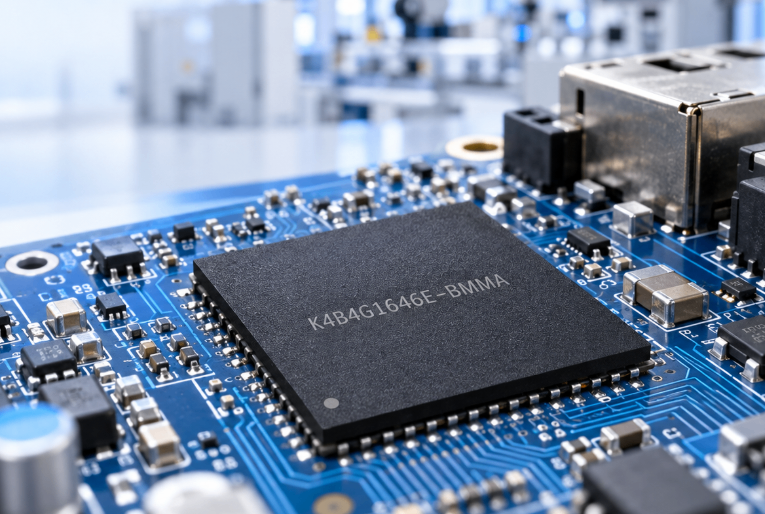
    2026 K4B4G1646E-BYMA In Stock & Price Update | DDR3L SDRAM Market Lead Time, Specs & Replacement Solutions Release Date: May 20, 2026 Abstract Global legacy low-power memory market keeps facing tight supply chain pressure throughout 2026. Mainstream memory manufacturers gradually cut down DDR3L production capacity and shift resources to high-generation memory products. As a classic low-power DDR3L memory chip launched by Samsung, K4B4G1646E-BYMA has stopped official mass production, resulting in sharp reduction of allocated sources, extremely long delivery cycles and continuous rising spot market price. In order to solve the urgent material shortage problem for long-cycle industrial equipment and embedded equipment manufacturers, our company officially launches inventory preferential activities for original authentic K4B4G1646E-BYMA, providing sufficient stable in-stock goods, transparent 2026 latest market price and efficient global logistics delivery service, fully meeting sample verification, small batch trial production and large-scale mass production demand of various industrial terminal products. 1. 2026 Market Delivery Cycle & Supply Demand Situation of K4B4G1646E-BYMA Since the beginning of 2026, the overall supply of DDR3L series storage chips in the electronic components industry has been in short supply, and the market supply gap is expanding day by day. As a widely used 4Gb low-power memory, K4B4G1646E-BYMA has been listed as EOL obsolete model by Samsung, and there is no new mass production plan in the follow-up. Affected by the overall capacity adjustment of the semiconductor industry, the official factory standard delivery cycle of K4B4G1646E-BYMA has extended from 8-10 weeks in 2025 to 22-30 weeks in 2026, and the delivery time of large bulk orders is even more than 36 weeks, which seriously restricts the normal production schedule of downstream manufacturers. In terms of market transaction price, affected by the decreasing available spot inventory, the market price of K4B4G1646E-BYMA has increased by 25% to 35% year-on-year, and there is a huge price difference between bulk procurement and scattered small batch procurement. Many manufacturers that take K4B4G1646E-BYMA as the core storage device are facing multiple risks such as production shutdown due to lack of materials, rising comprehensive production costs and uncontrollable project progress. In view of the severe market supply situation, our company has reserved a large number of high-quality original channel inventory of K4B4G1646E-BYMA through global supply chain layout. We launch 2026 time-limited inventory discount activities, aiming to provide stable and cost-effective procurement channels for global electronic manufacturing enterprises, and effectively avoid various risks brought by supply chain fluctuations. 2. Core Technical Parameters & Industrial Level Performance of K4B4G1646E-BYMA K4B4G1646E-BYMA adopts mature stable production process, belongs to low-voltage DDR3L high-speed synchronous dynamic random access memory, adopts standard 96-ball FBGA compact packaging, with excellent low power consumption performance and stable high-speed data transmission capacity. The chip passes strict industrial-level reliability test, and is equipped with core electrical specification VCEO=45V, which can effectively resist instantaneous surge voltage and complex electromagnetic interference in industrial environment, and maintain long-term stable working state. 2.1 Basic Parameter Information Full Part Number: K4B4G1646E-BYMA Brand: Samsung Semiconductor Memory Specification: 4Gb (256M×16 Bit) Product Type: DDR3L SDRAM Working Voltage: 1.35V low voltage standard Package Size: 96-ball FBGA Maximum Data Rate: 1866MT/s CAS Delay: CL=13 Working Temperature Range: 0℃ ~ +85℃ Environmental Standard: Fully compliant with RoHS lead-free environmental protection requirements 2.2 Key Electrical Performance Parameters Main Working Voltage Range: 1.28V ~ 1.45V I/O Interface Voltage: Synchronous low voltage design VCEO Withstand Voltage: 45V, strong anti-surge and overvoltage protection ability Typical Working Current: 131mA Moisture Sensitivity Grade: MSL Level 3 Low power standby design, suitable for battery power supply and low energy consumption equipment design 2.3 Practical Application Advantages Compared with traditional standard voltage DDR3 chips, K4B4G1646E-BYMA has more outstanding energy-saving performance, which can effectively reduce the overall power consumption of equipment. Combined with 45V high withstand voltage design and stable timing parameters, K4B4G1646E-BYMA can run stably in various complex working scenes, and is recognized and selected by many design engineers in the embedded industry. 3. Mainstream Compatible Alternative Models of K4B4G1646E-BYMA (2026 Verified) Considering the official production stop and ultra-long delivery cycle of K4B4G1646E-BYMA, our professional FAE technical team has completed actual board test and performance matching screening for many alternative models. We recommend multiple pin-to-pin compatible and performance equivalent replacement schemes from the aspects of packaging consistency, parameter matching degree, market supply stability and comprehensive cost performance, helping customers complete material replacement without modifying PCB boards and main control firmware. 3.1 Samsung Original Same Series Direct Replacement K4B4G1646E-BCMA: Completely consistent with K4B4G1646E-BYMA in packaging, voltage, rate and pin definition, stable supply of spot goods, which is the preferred zero-modification replacement model K4B4G1646E-BYMI: Widened temperature version, suitable for outdoor and high temperature working environment equipment replacement 3.2 Cross-Brand High Cost Performance Alternative Chips Micron MT40 series DDR3L memory SK Hynix H5AN4G8NCJR-VKC: Stable supply, consistent application field, good compatibility Winbond low-power DDR3L memory: High cost performance, sufficient inventory, suitable for cost-controlled mass production projects 3.3 Model Selection Suggestion If the project has strict requirements on original materials and zero modification, prefer Samsung same-series alternative models; if the project has loose material compatibility requirements and focuses on cost control and supply stability, you can choose cross-brand verified DDR3L memory chips to balance procurement cost and delivery cycle. 4. 2026 Time-Limited Promotion: K4B4G1646E-BYMA Sufficient In Stock & Discount Price In order to ease the industry-wide procurement shortage of K4B4G1646E-BYMA, our company officially launches 2026 exclusive inventory discount preferential activities, with sufficient original spot inventory and hierarchical bulk discount prices, to meet the diversified procurement needs of different customers. 4.1 Inventory Strength & Quality Guarantee Total Spot Inventory: More than 20000 Pcs K4B4G1646E-BYMA Production Batch: 26 latest new batches, original factory sealed packaging Quality Promise: 100% original brand new goods, support third-party professional quality testing, provide one-year after-sales quality warranty service 4.2 2026 Hierarchical Preferential Quotation (USD) Small Batch Order (1-50 Pcs): Special Price $7.20 Per Piece Medium Batch Order (51-500 Pcs): Special Price $6.10 Per Piece Large Batch Order (More Than 500 Pcs): Special Price $5.30 Per Piece, super large order can negotiate exclusive discount price 4.3 Delivery Advantage & Technical After-Sales Service All in-stock orders of K4B4G1646E-BYMA support payment on the same day and delivery on the next day, with stable global cross-border logistics, and goods can arrive in 3-5 working days. We can provide complete official datasheets, application circuit reference drawings, PCB packaging library files and one-to-one professional FAE technical docking services to quickly solve chip debugging, compatibility adaptation and scheme optimization problems for customers. 4.4 Main Application Fields K4B4G1646E-BYMA is widely used in industrial PLC control equipment, embedded industrial mainboard, intelligent IoT gateway, high-definition monitoring equipment, digital set-top box, intelligent household control terminal and other low-power high-reliability embedded electronic products. 5. FAQ Common Questions About K4B4G1646E-BYMA Purchase and Use Q1: Are your supplied K4B4G1646E-BYMA original new genuine products? A1: All K4B4G1646E-BYMA we provide are Samsung original authentic brand new components, all adopt original factory sealed packaging of new batches, support third-party institutional testing, with complete quality traceability system, genuine guarantee. Q2: How long is the delivery time for purchasing in-stock K4B4G1646E-BYMA? A2: We have sufficient physical spot inventory of K4B4G1646E-BYMA, no need to wait for 22-30 weeks official long cycle. After the order is confirmed, it can be delivered quickly, which can fully meet the urgent production and sample delivery needs of customers. Q3: Can K4B4G1646E-BCMA replace K4B4G1646E-BYMA directly? A3: Yes, K4B4G1646E-BCMA and K4B4G1646E-BYMA are completely consistent in packaging size, pin definition, VCEO 45V electrical parameters and operating performance, which can realize direct replacement without changing boards and programs. Q4: How long is the valid period for the 2026 preferential price of K4B4G1646E-BYMA? A4: This time-limited inventory discount activity is valid until June 30, 2026. The price is locked during the activity period, and the price will be adjusted according to the real-time market supply and demand after the preferential inventory is sold out. Q5: Can you provide relevant technical support for K4B4G1646E-BYMA design and debugging? A5: We provide full-process supporting technical services of K4B4G1646E-BYMA, including official data manual download, schematic design reference, PCB layout guidance and online technical consultation, to help customers quickly complete product design verification and mass production landing. Conclusion In 2026, the supply shortage of discontinued DDR3L low-power memory chips will continue to spread in the industry. As a classic stable 4Gb storage chip with VCEO 45V high reliability performance, K4B4G1646E-BYMA market spot resources are becoming more and more scarce. Our company relies on strong supply chain advantages to supply sufficient original in-stock K4B4G1646E-BYMA products and cost-effective 2026 market prices, and simultaneously sorts out a variety of verified compatible alternative schemes, effectively helping global electronic component purchasers and manufacturing enterprises avoid supply chain risks, stabilize raw material procurement costs, and ensure the smooth progress of various embedded electronic project research and development and mass production. Core Keywords: K4B4G1646E-BYMA, 2026 In Stock, K4B4G1646E-BYMA Price, Samsung 4Gb DDR3L SDRAM, VCEO 45V, Low Power Industrial Memory, Embedded SDRAM Chip, Electronic Components Spot Supply
  • MT40A512M16LY-075:E DDR4 Specs Deep Dive: Key Metrics

    Introduction: Point — DDR4 performance continues to cluster in the 2400–2666 MT/s tiers with 1.2V nominal operation; evidence from supplier datasheets and system deployments shows these speeds dominate typical server and embedded platforms. Explanation — this article delivers an engineer-focused, metric-first breakdown of the MT40A512M16LY-075:E to support system selection and integration decisions for DDR4 SDRAM integration. Point — scope and audience: evidence-driven engineers needing throughput, timing, power and validation guidance. Explanation — the following sections decode part nomenclature, walk through bandwidth and latency calculations, specify power/thermal limits, cover PCB/layout checklists, and give test pass/fail criteria for practical integration and risk trade-offs. 1 Part overview & nomenclature (Background introduction) Part-number decoding and package details Point — decode the identifier to reveal organization and capabilities. Evidence — MT40A512M16LY-075:E maps to an 8 Gbit density organized as 512M x 16 with a speed grade indicated by the suffix; Explanation — package metrics to call out include BGA ball count and pitch, FBGA package type, thermal pad presence, and pinout for VDD/VSS and command/address lanes; the MT40A512M16LY-075:E designation should be checked against the vendor datasheet when confirming package and speed. Quick specs snapshot (at-a-glance table guidance) Point — present essential numbers in a spec-summary box for rapid review. Evidence — the table below lists the core fields engineers should assemble from the datasheet. Explanation — triple-check timing, max data rate, and thermal limits on the official datasheet before final BOM sign-off. Field Typical Value / Note Density 8 Gbit (512M x 16) Data width x16 per device Nominal voltage 1.2 V (DDR4 nominal) Max data rate Commonly 2400–2666 MT/s class (verify part marking) Clock (fCK) MT/s ÷ 2 (report in MHz) Operating temp 0°C to 95°C (check industrial vs. commercial grade) Form factor FBGA—note thermal pad and ballmap 2 Performance metrics & timing parameters (Data analysis) Data rate, bandwidth and throughput calculations Point — convert MT/s and data width into effective bandwidth for design budgeting. Evidence — for a x16 device, bandwidth (GB/s) = (MT/s × 2 bytes) / 1000; Explanation — example: at 2400 MT/s a single x16 device yields ~4.8 GB/s (2400 × 2 = 4800 MB/s). For a 64-bit channel (four x16 devices) multiply by four to estimate peak channel throughput (~19.2 GB/s at 2400 MT/s). Annotate sustained vs. peak: sustained will be lower due to refresh, command overhead and open-page efficiency. Latency and timing values to prioritize (CAS, tRCD, tRP, tRAS, tRFC) Point — cycle counts must be translated to nanoseconds to assess real latency. Evidence — tCK = 1000 / (MT/s ÷ 2) in MHz units; Explanation — example: at 2400 MT/s, fCK ≈ 1200 MHz and tCK ≈ 0.833 ns, so CL15 ≈ 12.5 ns. Prioritize CAS (CL), tRCD, tRP and tRFC for worst-case response and refresh impact; expect typical DDR4 timing ranges (e.g., CL15–17 at mainstream speeds) and present margins for training and corner testing. 3 Power, thermal limits & reliability metrics Voltage & Sequencing Point — power rails and sequencing determine device reliability during bring-up. Evidence — nominal supply is 1.2V with allowed tolerances; Explanation — verify VDD/VDDQ rails, enforce ramp order (VTT/VREF), and check low-power modes. Measure active vs. idle power for thermal budgeting. Thermal & Reliability Point — thermal envelope impacts timing margins and lifetime. Evidence — datasheet operating/storage ranges are critical for derating. Explanation — include thermal derating advice, call out refresh rate effects, and recommend ECC strategy for system reliability. 4 System integration & design considerations Rank/organization and memory subsystem planning Point — the 512M x 16 organization informs rank, bank and addressing decisions. Evidence — a x16 device can be used singly or in parallel to form x32/x64 channels; Explanation — understand whether the part is single-rank or dual-rank, how ranks affect timing budgets, and how capacity planning maps to addressing. Signal integrity, routing and PCB/layout checklist Point — physical routing drives timing closure and training success. Evidence — best practice includes DQ/DQS length matching and controlled impedance. Length-match DQ groups within specified ps. Controlled impedance (50Ω single-ended / 100Ω differential). Strategic test point placement for DQ, DQS, and CK. Pre-tape-out eye and crosstalk simulations. 5 Validation, test procedures & selection checklist Key validation tests and pass/fail criteria Point — define lab tests with measurable acceptance metrics. Evidence — essential tests include timing margin sweeps and BER/stress at temperature. Explanation — pass/fail examples: no training failures across all ranks, BER specified ps for DQ read/write eye opening. Choosing this part: application fits and trade-offs Point — create a short decision checklist against system needs and specs. Evidence — consider cost vs. performance, thermal headroom, and capacity. Explanation — choose MT40A512M16LY-075:E when its density, x16 organization and speed grade align with channel-level throughput and board routing constraints. Summary & Key Takeaways Point — recap chief metrics and system implications. Evidence — the part delivers x16 organization at mainstream DDR4 voltage and speed classes; Explanation — MT40A512M16LY-075:E offers an engineering balance of density and throughput, but engineers must prioritize timing margin, SI discipline and thermal validation. 8 Gbit Density: Organized as 512M×16; verify package and ballmap in the datasheet before BOM decisions. Bandwidth Calculation: Single x16 device ≈ (MT/s × 2 bytes); account for sustained vs. peak for real-world workloads. Validation Priorities: Run DDR training, timing margin sweeps, and BER stress tests; document ECC and refresh impact. Frequently Asked Questions How do I compute effective bandwidth for a MT40A512M16LY-075:E device? Compute bandwidth by multiplying the MT/s by the device byte width: for x16 devices byte width = 2 bytes. Example: 2400 MT/s × 2 = 4800 MB/s (4.8 GB/s) per device. For a 64-bit channel, multiply by four. Annotate sustained throughput separately to account for refresh and protocol overhead. What voltage and sequencing checks are critical for DDR4 SDRAM integration? Ensure VDD and VDDQ meet the 1.2V nominal tolerance and follow the vendor-recommended ramp order and timing for VTT and VREF relative to command/address lines. Measure currents during power-up to detect abnormal draw. Validate low-power states if used and maintain clean, stable rails to avoid training failures. Which validation tests best predict field reliability for a chosen DRAM spec? Combine timing margin sweeps, DDR training verification across temperature, long-duration BER/stress tests and power profiling. Acceptance criteria should include no training failures, BER below target threshold (e.g., Technical Specs Deep Dive | MT40A512M16LY-075:E Engineering Guide